EDC
Edu Compass
The main objectives of the project are to support students in selecting specializations through personalized, AI-based recommendations, integrate Large Language Model (LLM) analysis into academic planning, and improve the efficiency and usability of the decision-making process. The team will develop a responsive web application that connects front-end, back-end, and LLM components, providing accurate recommendations and an accessible interface. Project success will be measured by key performance indicators: response time (<1 s), user satisfaction (≥80%), usability (SUS ≥75), and system uptime (≥99%). Continuous monitoring will address data quality and model bias risks.
The project addresses the challenge students face in selecting a specialization that matches their competencies and career objectives. Current academic advising and career planning processes rely on manual input and static resources, resulting in limited efficiency and adaptability. Students spend considerable time collecting and analyzing information due to the lack of automation, personalized recommendations, and functional user interfaces. Key issues include the absence of intelligent tools for specialization matching, restricted data accessibility, and low interface usability. The project will develop a web application based on a Large Language Model (LLM) to provide personalized, data-driven recommendations, improving the accuracy and efficiency of academic decision-making.
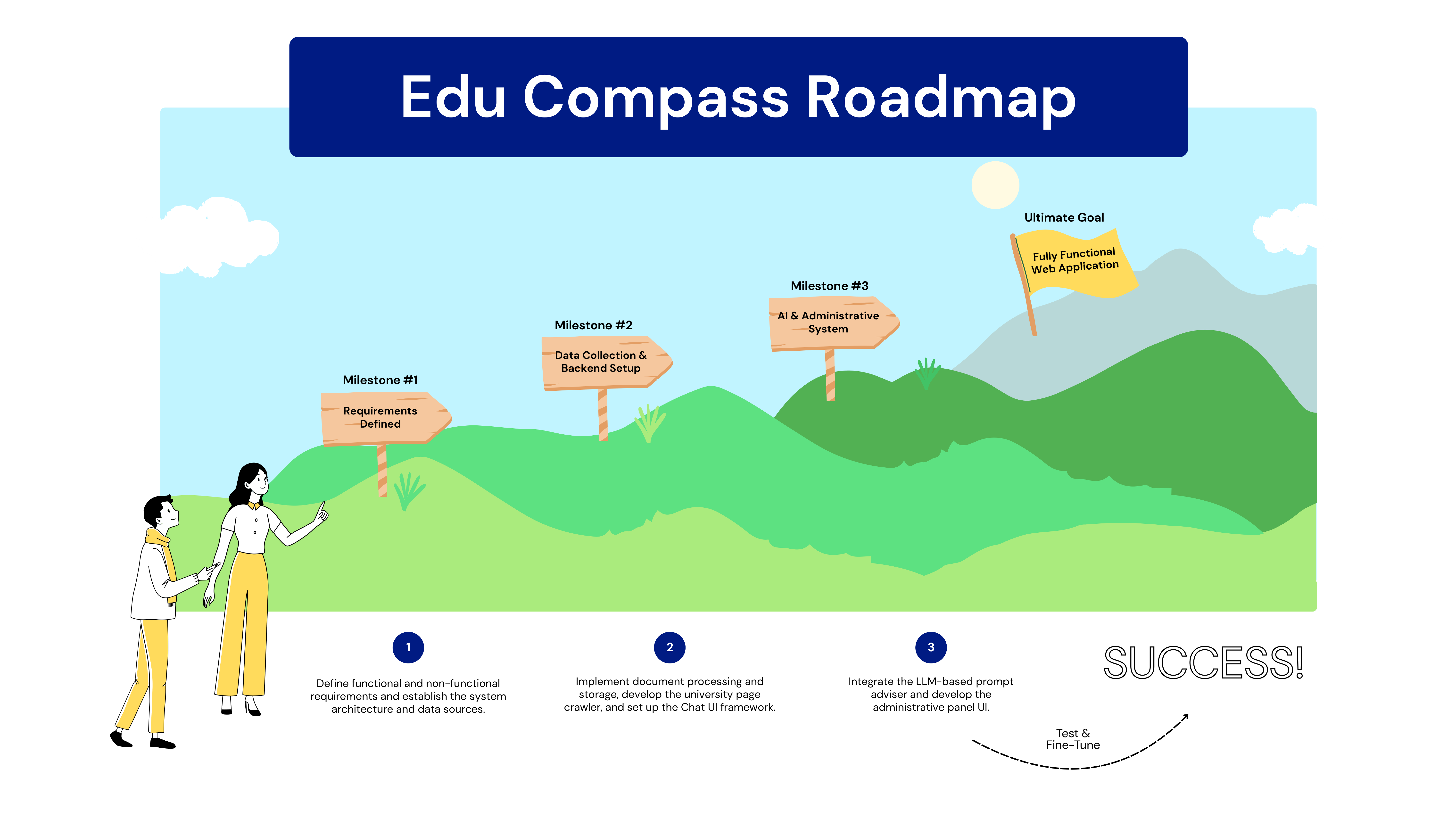
The project will deliver a web application that assists students in selecting a master’s degree specialization. The system will use a Large Language Model (LLM) to generate personalized recommendations based on user data. Supporting deliverables will include test scripts for verifying system performance and recommendation accuracy, an administrative panel for managing student data and database content, and integration modules connecting the front-end, back-end, and AI components. Additional elements will consist of a data scraper for acquiring and updating information from external academic sources, a bulk data uploader for large-scale imports, and configuration files for automating deployment in a multi-container environment. The web application will provide a responsive interface accessible through modern browsers, supporting real-time recommendations, efficient system integration, and centralized administration for monitoring and maintenance.
The main beneficiaries of the project are students selecting a specialization. They will receive AI-based recommendations that streamline decision-making and align academic choices with individual skills and career objectives. University staff, including advisors and IT teams, will benefit from process automation and improved access to student data. Partner institutions and educational platforms will gain new opportunities for collaboration, research, and comparative analysis. The broader academic community will benefit from enhanced guidance tools and better-prepared graduates.